Selling to Biotech Companies: An Outbound Guide for Scientific Suppliers
This guide explains how scientific suppliers (e.g., CDMOs, CROs, laboratory software, laboratory products, etc.) can use outbound to sell to biotech companies. First, decide whether outbound fits the way your offer is bought. If it does, the process is about choosing relevant companies, finding the right people and starting conversations you can learn from.
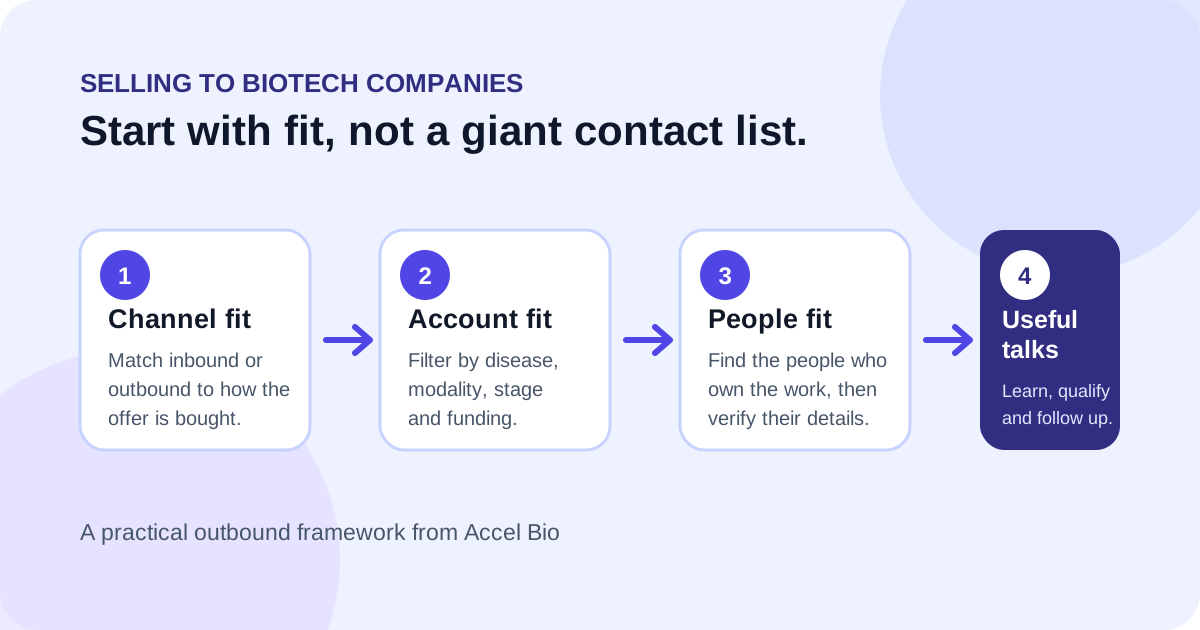
1. First, decide whether outbound fits what you sell
Outbound makes sense when a useful sales conversation can begin before the buyer has an immediate requirement. It tends to fit relationship-led offers with longer consideration periods. When buyers only look for the offer at a narrow moment of need, inbound deserves more weight.
We’d give inbound more weight for offers such as in vivo services and laboratory consumables. SEO and Google Ads can reach someone who is actively looking when the need appears. LinkedIn ads may also be worth testing when the audience is active there. If a scientist needs a particular consumable this week, a call six months earlier is unlikely to win any awards for timing.
For manufacturing services, clinical CRO services, scientific software and other offers where a conversation can start before a formal vendor search, we’ve found outbound effective.
That distinction is the starting point for this guide. We are not going to compare every marketing channel. We are going to show how we approach outbound once it has a clear job to do.
Inbound and outbound can work together. Inbound can capture existing demand while outbound develops a defined market. But if an early conversation has value, the next question is which biotech companies are worth approaching.
- Use inbound when purchase timing is narrow and buyers are likely to search when the need appears.
- Use outbound when an early relationship and direct market feedback have real value.
- Give each channel a clear job instead of measuring every activity as though it were the same.
2. Build the biotech company list around scientific fit
Before building the list, define the disease areas, modalities and development stages that fit your offer. Then use those three criteria to decide which companies belong in the campaign. A company should not make the list just because it is a biotech. It should have a program whose science and stage create a plausible fit for what you sell.
Biopharma-specific databases such as BiopharmIQ, Zymewire, GlobalData and Synapse by Patsnap can help you find companies that match those criteria. Use the database to build the initial list, then verify the important program details against company pages, announcements and study records.
Funding can help with prioritization. Check company announcements, SEC filings and NIH RePORTER, then look at what was funded and which program it supports. A financing announcement is a research signal, not a purchase order wearing a lab coat.
Every company should end this step with a clear reason for being on the list. Then you can find the people most likely to own the relevant work.
- Record why each company fits, not just its name and website.
- Keep the source and date beside every pipeline, stage and funding note.
- Treat a signal as a reason to research, not proof of an open project.
- Remove accounts that cannot use the offer before finding contacts.
3. Find the people who actually own the work
With a qualified company list in place, the next job is mapping the people inside those accounts. The right biotech contact depends on the offer, the company’s size and the work involved. Scientific leaders, lab managers, clinical operations, technical operations, external manufacturing, procurement and department heads may each matter in a different campaign. Seniority alone does not make someone the right person.
We recommend Apollo for building the people list. In our experience, it has been the most comprehensive and current option we’ve used for working out who is employed where. That is our operating preference, not an independent claim that every record is correct. Verify current employment, role and company before enrolling someone in outreach.
It also works fine for email addresses in our experience. For phone enrichment, we recommend Derrick App or Airscale. Enrichment simply means adding contact information that is missing from the starting record. Keep the person, role, account and reason for contact together so the list remains understandable after the spreadsheet has met three different salespeople.
Do not search for one title and assume the job is done. At a small biotech, one person may cover several functions. At a larger company, the technical user, internal champion, procurement contact and final decision maker may be different people. The first conversation can help map that buying group without pretending you already know it.
Once you know which companies matter and who may own the work, you can choose the best way to reach them. For us, that usually starts with a call.
- Match roles to the specific product, service and stage of the program.
- Verify that each person still works at the company.
- Track referrals to colleagues as useful account intelligence.
For help putting research and outreach into practice, explore Accel Bio’s life-science lead generation.
4. Use calls to start conversations, then support them
At Accel Bio, cold calling has been our most effective outbound channel by far. There is no other channel where you can reliably get 3-5 conversations each day with people who fit your ideal customer profile. That is based on our experience, and a conversation is not the same thing as a booked meeting.
The immediate feedback is a large part of the value. You can hear whether the science fits, the role is right and the timing is off. You also learn the language buyers use for the problem. A call can save weeks of polishing a message for a market that is telling you the list is wrong.
Email can support that process, but we’ve found it hard to make work in crowded inboxes. Keep it short and relevant to the program or workflow you researched. Do not explain somebody’s own science back to them. They were there when it happened.
LinkedIn can work when the target audience uses it. In our experience, it tends to be less effective with some deeply scientific prospects, including CSOs and lab managers. That does not mean those people never use it. Test the channel against the actual audience rather than adding it to every campaign automatically.
An illustrative opening might be: “We support teams working on antibody programs at the preclinical stage. Is outside assay work something you look after, or is there someone else I should speak with?” Adapt that to the truth of your offer. It is an example, not a line taken from a client call.
Calls, email and LinkedIn each have a different job. Next, turn those roles into a sequence the team can follow.
- Count live conversations separately from meetings and opportunities.
- Use the call to test relevance, ownership and timing.
- Let email and LinkedIn support the conversation rather than repeat the same pitch.
5. Put the outreach into a sequence your team can follow
Now turn the channel plan into a practical follow-up sequence: which channel comes next, why it comes next and what changes when someone responds. We recommend considering Close CRM, Apollo or Instantly. The tool matters less than having one place where the team can see what has happened and what should happen next.
Apollo documents email steps plus manual phone and LinkedIn tasks. Close workflows can combine email, calls and tasks. Instantly is an email-led option to consider. Check the current capabilities of the tool you choose instead of assuming they all handle every channel in the same way.
A starting sequence could include a call to confirm ownership, a concise email when the information is useful, a follow-up call and a LinkedIn task for people who are active there. That is an illustrative structure, not a fixed Accel Bio cadence. Exact timing and touch count should reflect the market, the offer and what prospects tell you.
Once somebody responds, take them out of the generic flow and follow the conversation. Record a requested follow-up date and bring in a technical colleague when the buyer needs depth.
Stop when someone asks not to be contacted. Automation should help the team remember things, not make it forget that a human replied.
Before loading the list and pressing start, check that the campaign follows the outreach rules in each market you plan to contact.
- Give every step a reason and an owner.
- Move responders into a human follow-up process.
- Use requested timing and referrals to improve the account record.
6. Check the outreach rules before launching
With the sequence mapped out, the last setup step is compliance. Business outreach rules depend on the country, channel, subscriber type and calling method. In the US, the FTC says CAN-SPAM applies to commercial email, including business-to-business messages. In the UK, the ICO explains separate requirements for business email, live calls, corporate subscribers, individual subscribers and objections.
Before launching, confirm what applies to the exact campaign. Use accurate sender information, identify the business, provide required contact and opt-out details, honor objections and check relevant suppression registers before calling UK numbers. Automated calls and messages can carry additional requirements.
Once the account list, contacts, sequence and compliance checks are ready, launch the campaign. The work then shifts from planning to learning.
FTC CAN-SPAM compliance guideICO guidance for business-to-business marketing
- Confirm the rules for the exact country, channel and subscriber type.
- Identify the business and keep sender information accurate.
- Honor opt-outs, objections and applicable suppression registers.
7. Launch the campaign and diagnose what is not working
Once outreach starts, separate the stages and listen to the reasons behind the numbers. Track accounts researched, contacts reached, calls attempted, live conversations, positive replies, meetings booked, meetings held, qualified opportunities and closed deals. Combining all of that into “leads generated” makes a tidy chart and a fairly useless diagnosis.
If phone numbers are wrong, fix the data. If people keep referring you elsewhere, revisit the roles. If the science does not fit, tighten the disease, modality or stage filters.
If relevant prospects say the timing is wrong, improve follow-up dates and account signals. If the right people engage but the message is unclear, then work on the message.
Change one major part at a time where practical. That makes it easier to tell whether a new list, new role, new channel or new opening improved anything. Review US and UK results separately because the same workflow can meet different data quality, compliance and market conditions.
Treat email opens and clicks as directional rather than confirmed human interest. Security tools and bots can affect those figures. Conversations, replies and clearly defined sales stages provide a firmer basis for deciding what to change next.
This feedback loop is what turns outbound from a static list and sequence into a repeatable sales process. The case below shows what one version of that process produced.
Apollo sequence reportingApollo email analytics
- Bad contact data calls for data work, not a new email subject line.
- Wrong roles call for better buyer mapping.
- Poor scientific fit calls for tighter account filters.
- Wrong timing calls for useful follow-up dates and signals.
- Weak conversations call for a clearer, more relevant message.
What selling to buyers looks like in campaigns
Every campaign looks different. Even with our decades of combined experience, some campaigns hit it right out of the gate, some take a few months to start generating ROI, and others simply never generate enough ROI to justify the investment. That is why we treat the early stages as a process of testing, learning and deciding whether the economics work.
For one scientific software provider, our campaign booked 23 meetings in its first four months, including five at department-head level. That campaign found traction quickly, but it is one client example rather than a benchmark for every scientific supplier.
The most useful lesson is simple: the list has to make scientific and commercial sense before outreach can improve it. Start with a narrow hypothesis, get into real conversations and let the market show you what needs changing. The spreadsheet will survive having fewer rows.
Questions from commercial teams
What is the best way to sell to biotech companies?
Start by matching the channel to the offer, then qualify companies by disease area, modality, development stage and funding. For outbound, find the people who own the relevant work and use a measured sequence of calls, email and LinkedIn activity that improves from real responses.
Should scientific suppliers use inbound or outbound marketing?
Use inbound when buyers tend to search at a narrow moment of need. We’ve found outbound effective for relationship-led offers such as manufacturing, clinical CRO services and scientific software. Many suppliers can use both, with a clear job for each channel.
How do you build a biotech target-account list?
Filter companies by the diseases they address, the modalities they work with and the development stage of their programs. Use funding as another research signal, then verify important details against company sources, filings and study registries.
Which people should a scientific supplier contact?
The right roles depend on the offer and company. Scientific leaders, lab managers, clinical operations, technical operations, external manufacturing, procurement and department heads may all matter in different campaigns. Match the person to the work rather than choosing by seniority alone.
Is a biotech funding announcement a buying signal?
It is a reason to research, not proof of a purchase. Check what the financing supports, which program it relates to and whether that program could use your offer. Confirm actual timing, budget and vendor status through research and conversation.
What should a biotech lead-generation campaign measure?
Track accounts researched, contacts reached, calls attempted, live conversations, replies, meetings booked, meetings held, qualified opportunities and closed deals separately. Those stages reveal different problems and should not be combined into one lead number.
Build your next campaign around buyer fit
Explore our life-science lead generation service, then bring your target accounts, service priorities and sales challenges to a 30-minute discussion.
Discuss your campaignAbout Accel Bio
Accel Bio provides account research, phone-led outreach, qualification and meeting scheduling for life-science suppliers. Meet the roles on your dedicated team.
Sources and further reading
- FDA drug-development process
- ClinicalTrials.gov protocol definitions
- SEC company filings
- NIH RePORTER
- GlobalData
- BiopharmIQ
- Zymewire
- Synapse by Patsnap
- Apollo
- Derrick App
- Airscale
- Close CRM
- Apollo sequences
- Instantly
- FTC CAN-SPAM compliance guide
- ICO business-to-business marketing guidance
- Apollo sequence reporting